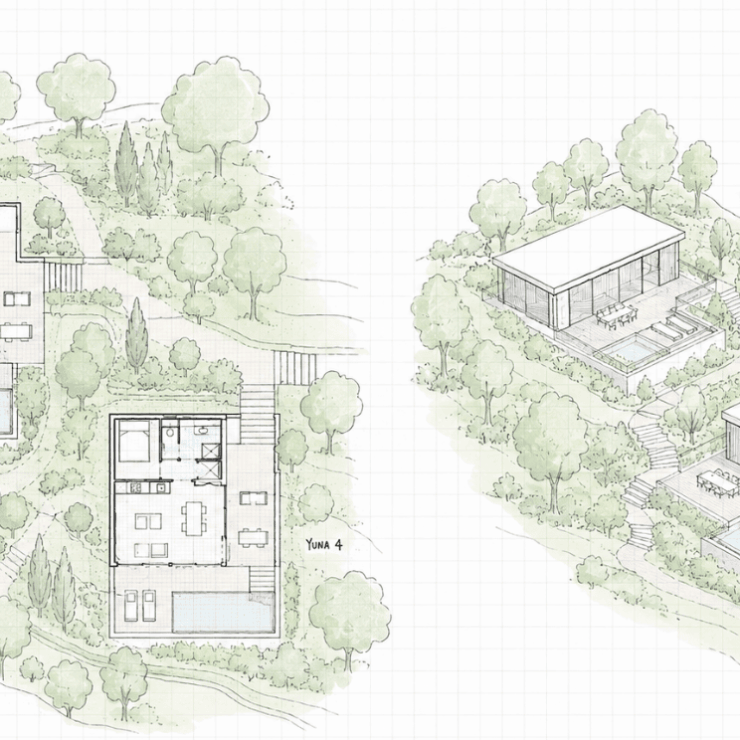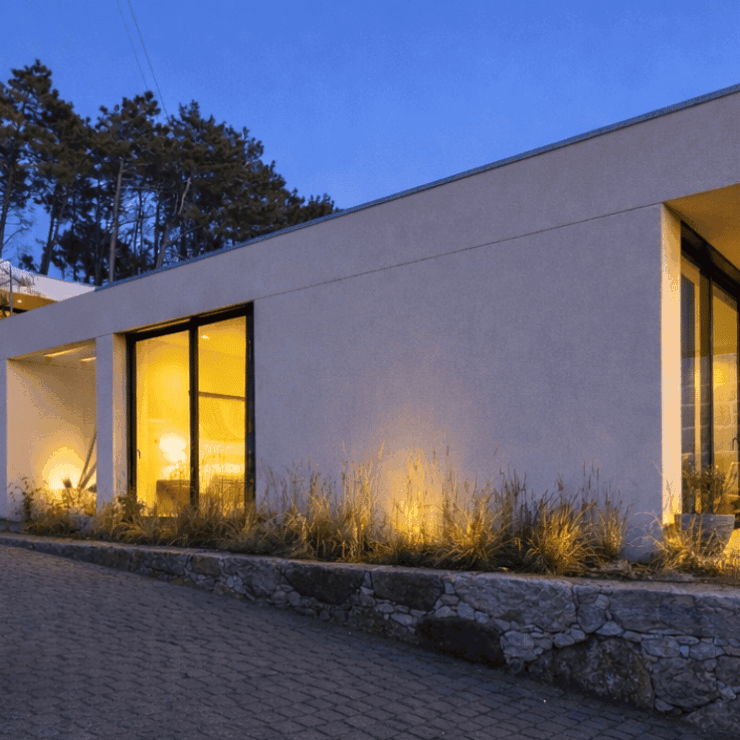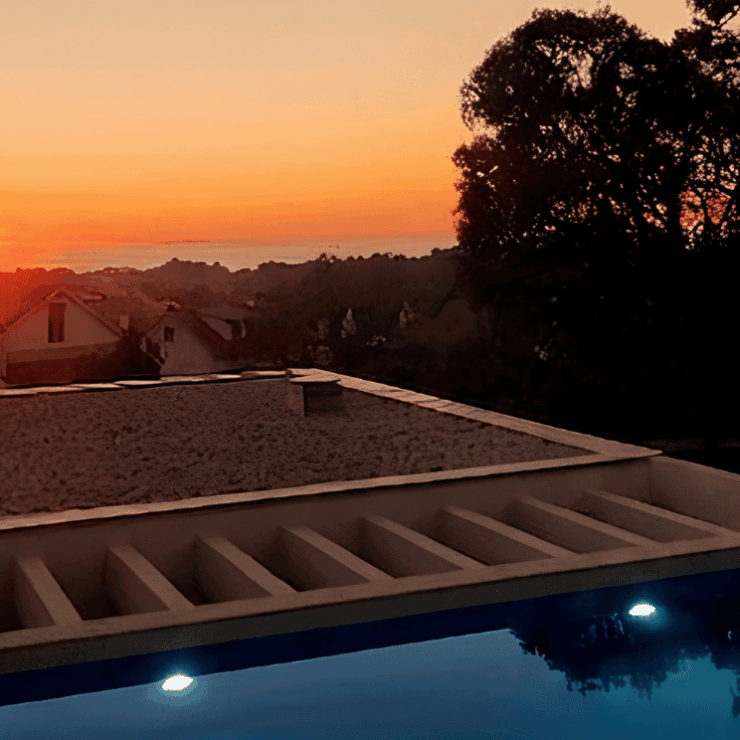
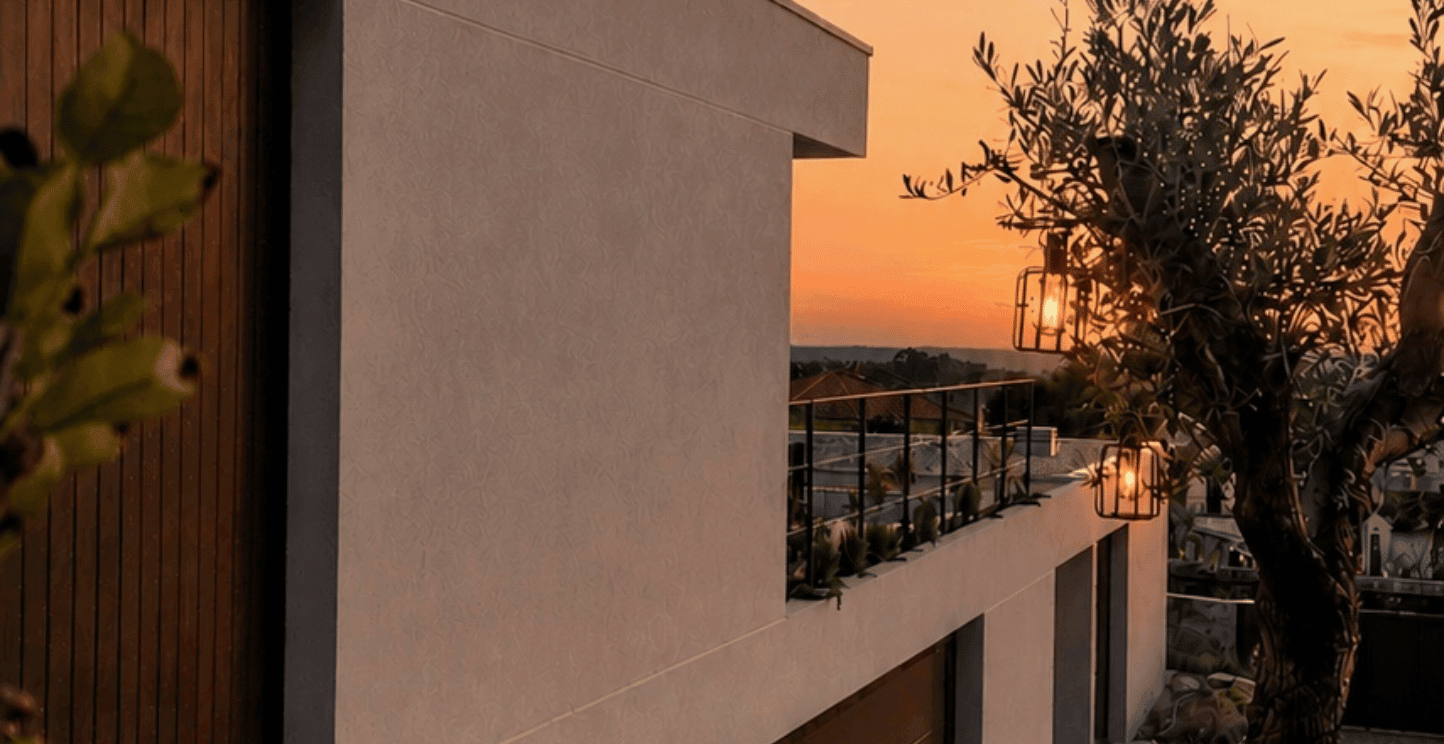
People often ask us about the houses. Guests walk in, look around, and somewhere in the first hour the question comes: “Who designed this?” The answer is MIMA Housing, and both Yuna houses are MIMA houses. Here’s what that actually means, and what it’s like to stay in one.
The short answer: MIMA Housing is a Portuguese architecture studio known for minimalist, prefabricated homes built around a modular timber structure. Their design philosophy is inspired by the traditional Japanese house: light, flexible, calm, and built on a simple repeating grid. Their very first MIMA House was named Building of the Year by ArchDaily in 2011, and the studio has been refining the idea ever since — including a private holiday house designed together with Philippe Starck.
The idea behind MIMA
MIMA started with a question: can a house be simple, beautiful, quickly built and genuinely well made, all at once? Their answer draws on Japanese residential architecture, a tradition where homes were essentially prefabricated centuries before the word existed, with standardised posts, beams and sliding panels crafted separately and fitted together like a puzzle.
A MIMA house works the same way. A timber post-and-beam structure, a regular grid, large glazed panels that blur the line between inside and outside. Nothing decorative for the sake of it. As MIMA themselves put it: simplicity is the ultimate sophistication. Not strange or showy architecture, timeless, comfortable buildings that age gracefully.
That last part is what won us over.
Why we chose MIMA
When we decided to build in Portugal, we had no construction experience — just a strong feeling about how we wanted our home to feel. Early in the search we found MIMA, and their philosophy read like an echo of our own: large windows to bring in the light, natural materials that age beautifully, spaces that are warm, calm and practical. Never oversized just for the sake of it.
What followed was months of weekly sessions with the MIMA team — sketching, questioning, adjusting every line until the design truly belonged to us and to this hillside. That’s the thing about the MIMA system: every house shares the same DNA, but no two are alike. Yuna One and Yuna Two are proof. Same philosophy, two very different houses.
What it’s like to stay in one
This is the part no floor plan can show you. A MIMA house changes with the light. In the morning, the sun moves across the wooden floor and you follow it outside with your coffee. The big windows mean the ocean is part of the living room. The line between indoors and outdoors gets so thin you stop noticing it, doors open, and the terrace simply becomes another room.
It’s architecture you don’t have to think about. It just quietly makes every day here better. Guests tell us they sleep deeper, read more, and check their phones less. We don’t think that’s a coincidence.
Watch the story
MIMA came to film at Yuna for the second episode of their Home Stories series — a day of filming around the houses and the coast, where we told the story of how Yuna came to be, together with the people who designed it. You can watch the episode here:
And if you’d like to experience a MIMA house rather than read about one — that’s what Yuna is for.
Quick facts
- MIMA Housing is a Portuguese architecture studio, founded by architects Mário Sousa and Marta Brandão
- Design philosophy inspired by the traditional Japanese house: modular, light-filled, minimalist
- The original MIMA House won ArchDaily’s Building of the Year in 2011
- Both Yuna One and Yuna Two were designed by MIMA
- Yuna is featured in episode 2 of MIMA’s Home Stories video series