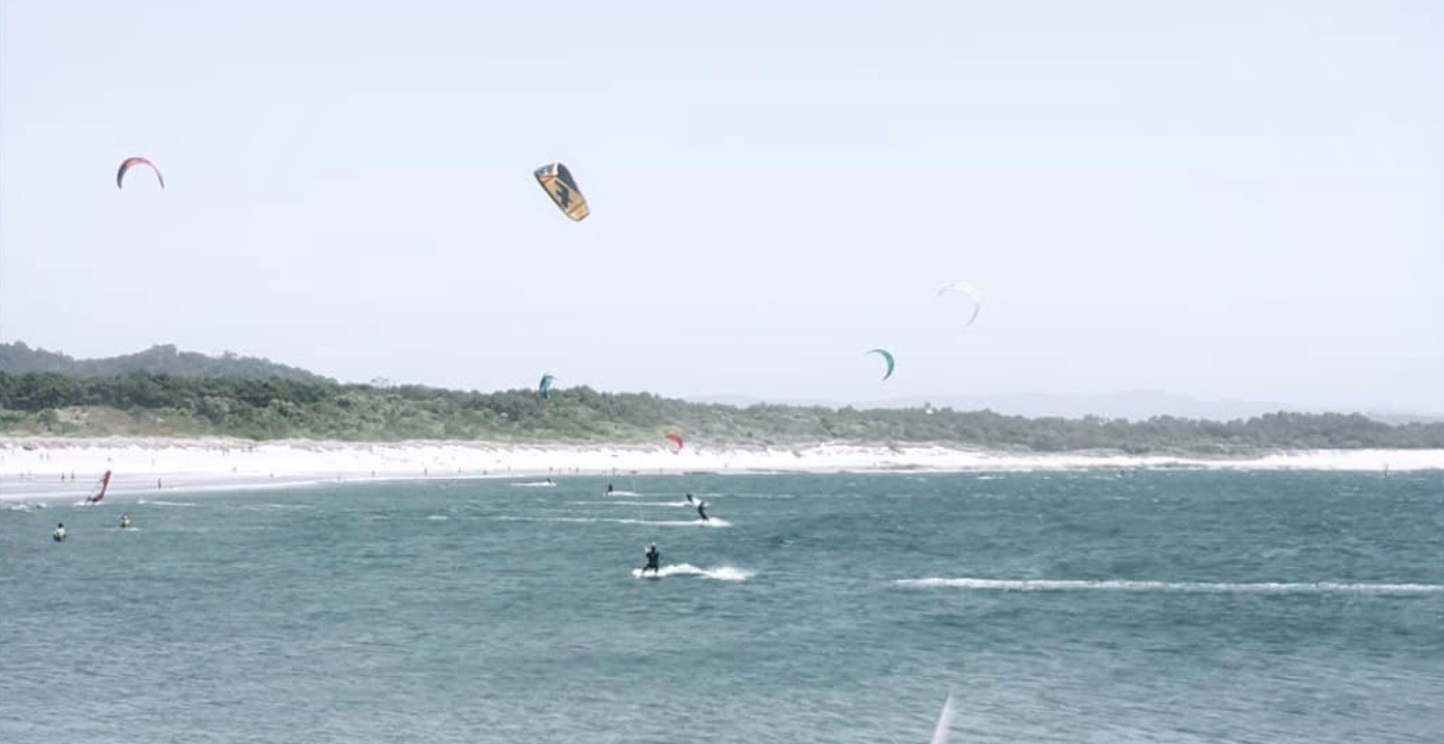
The Nortada is the steady north to north-west wind that blows down the Atlantic coast of Northern Portugal through the summer. It is a thermal wind, most reliable from June to August, and it is the reason Praia do Cabedelo, near Viana do Castelo, has become one of Europe’s most dependable places to kitesurf. In May 2026 it even drew the Formula Kite World Championships to the beach. Here is what the Nortada is, why it blows, and when you can count on it.
What does “Nortada” mean?
The name comes straight from the Portuguese word for north, norte. The Nortada is simply the north wind, the one that arrives on cue through the warmer months and sets the rhythm of daily life along this coast. Fishermen, surfers and kitesurfers have all learned to read it.
Why does the Nortada blow?
The Nortada is a thermal wind, which means it is driven by the sun rather than by passing storms. As the land heats up through the day, the warm air above it rises, and cooler air is drawn in off the cold Atlantic to take its place. That inflow is the Nortada.
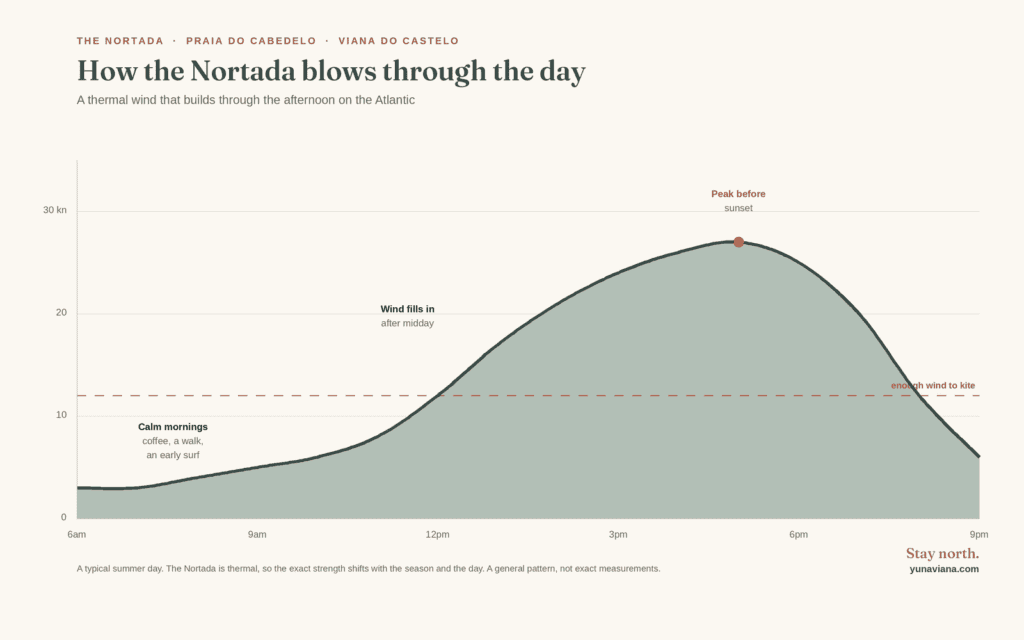
It explains the rhythm you soon notice here. Mornings are usually calm and still. A breeze builds through the afternoon and often peaks in the hours before sunset. It also means the forecast tends to under-read the wind. On a north wind, you can usually add five to ten knots to what the apps predict.
When does the Nortada blow?
The Nortada runs from roughly May to mid-October. It is at its most reliable from June to August, when it fills in on around five days out of seven. September holds the warmest water of the year and thinner crowds, which makes it a favourite of ours.
In winter the thermal engine switches off, and the coast is left to Atlantic weather systems that bring stronger but far less predictable wind. For a full month-by-month picture of wind, water and wetsuit, see our guide to the best time to kitesurf at Cabedelo.
Why the Nortada makes Cabedelo a kitesurfing spot
Reliable wind is only half the story. What makes Praia do Cabedelo special is that the Nortada arrives alongside two very different pieces of water, within a short walk of each other.
At the northern end of the beach, a long sea wall shelters the river mouth and leaves a patch of glassy, flat water. It is ideal for first lessons and for foiling. A little south at Rodanho, the wind comes in more onshore and the Atlantic swell rolls through, which is where you head for waves. Few spots in Europe give you both so close together.
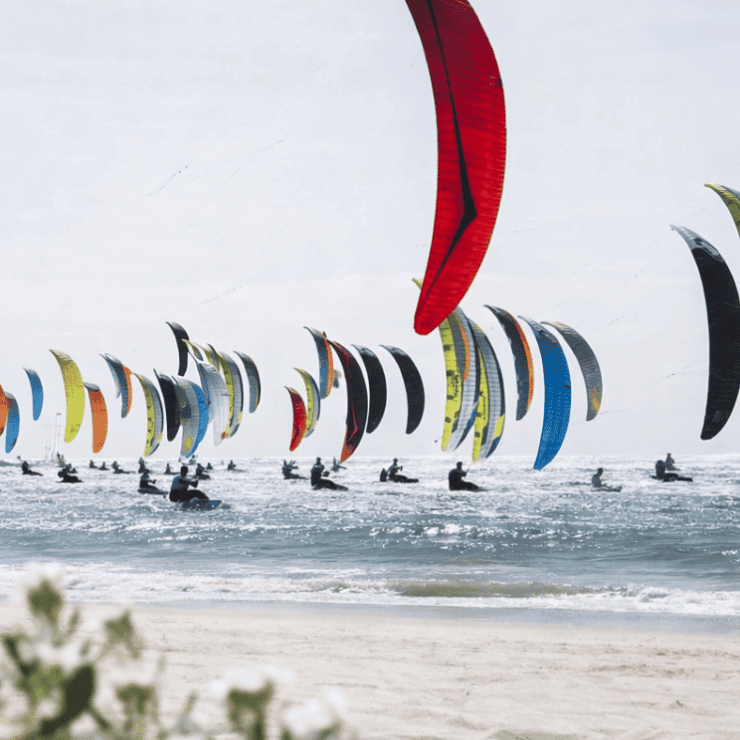
It is also why Cabedelo now hosts international competition. In May 2026 the beach welcomed the Formula Kite World Championships, an Olympic-class event that brought the world’s best kitefoilers to Viana do Castelo. You can read more about the spot itself on our Praia do Cabedelo guide.
What is it like to ride the Nortada?
There is a lovely rhythm to a Nortada day. Mornings are calm, so there is time for coffee on the terrace, a walk, or an early surf. By early afternoon you feel the first proper pull on the kite, and by late afternoon the whole bay comes alive. Sessions often run right up to a golden sunset over the Atlantic. Then the wind drops with the light, and the evening turns still again. It is a wind you plan a day around, rather than one you fight. That is part of why we love it.
Where to stay to catch the Nortada
We built Yuna a few minutes from Cabedelo, on a hillside with a view over the Atlantic, partly for that rhythm. Yuna One has a private saltwater pool and sleeps up to six, and Yuna Two has a private garden and an outdoor Gardentub. Both sit close enough to be on the water the moment the wind fills in, and quiet enough to rest when it drops. You can book either one directly with us
Frequently asked questions
The Nortada is the prevailing north to north-west wind along the Atlantic coast of Northern Portugal. It is a thermal wind, strongest in summer, and it is what makes the region such a reliable place to kitesurf.
The name comes from norte, the Portuguese word for north. The Nortada is the north wind that blows in through the warmer months.
Through the season it usually blows between 16 and 35 knots in the afternoon. Because it is thermal, it often runs five to ten knots stronger than the forecast suggests.
At Praia do Cabedelo, four minutes from Yuna. The sheltered northern end gives flat water for beginners and foiling, while Rodanho, just to the south, gives waves.